
Adaptive Automation Based on Business Context Signals: Revolutionizing South African Businesses
In today's fast-paced South African business landscape, adaptive automation based on business context signals is emerging as a game-changer. This trending approach leverages AI to dynamically adjust workflows using real-time data like market shifts, customer behavior, and local…
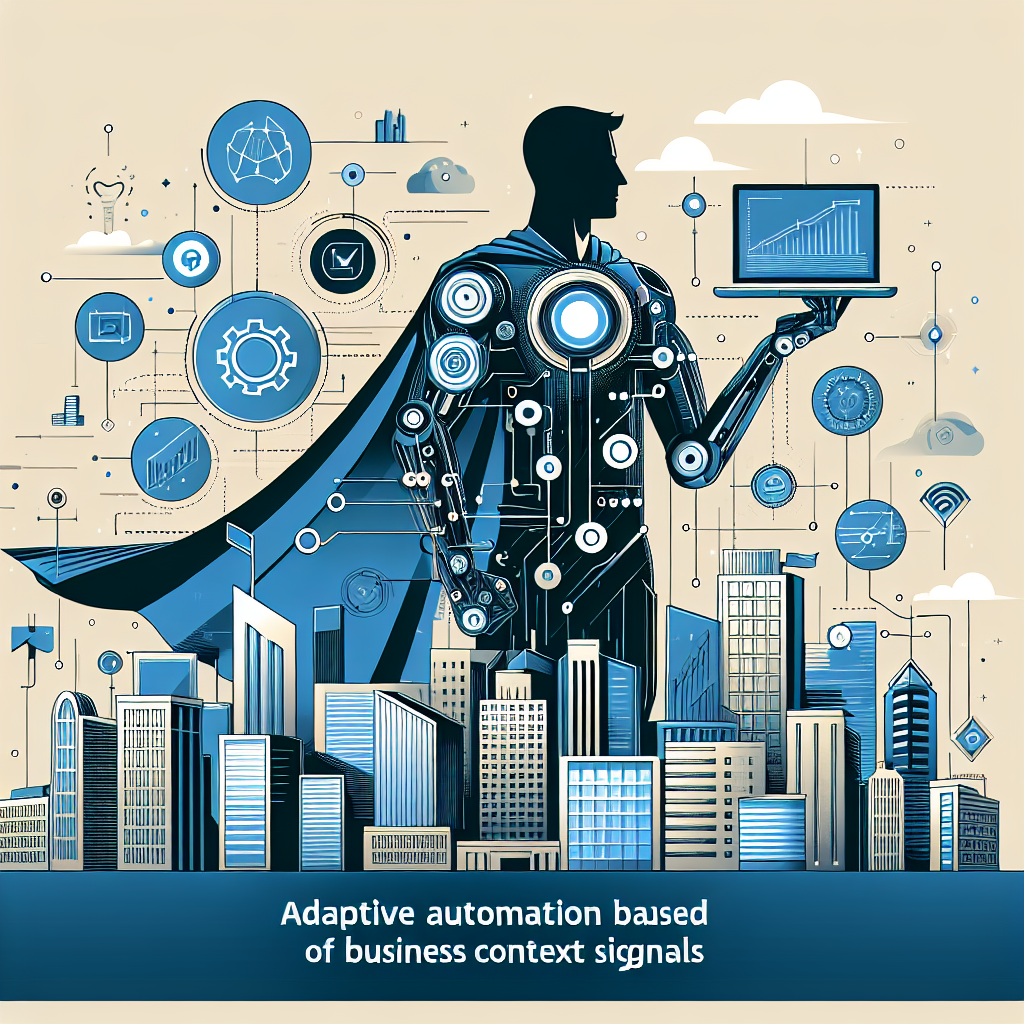
Adaptive Automation Based on Business Context Signals: Revolutionizing South African Businesses
In today's fast-paced South African business landscape, adaptive automation based on business context signals is emerging as a game-changer. This trending approach leverages AI to dynamically adjust workflows using real-time data like market shifts, customer behavior, and local disruptions such as load-shedding, helping companies like those in Johannesburg's financial hubs stay agile and resilient[1].
What is Adaptive Automation Based on Business Context Signals?
Adaptive automation based on business context signals refers to intelligent systems that automatically modify processes in response to contextual inputs. Unlike static automation, it uses AI decision engines to analyze patterns from historical data, real-time feeds, and external factors—such as weather disruptions or cyber threats—to execute context-aware actions[2].
For South African enterprises, this means automation that "reads the room," re-prioritizing tasks during KwaZulu-Natal floods or civil unrest, much like Shoprite's AI system that rerouted shipments and cut stockouts by 30%[1]. High-searched terms like Agentic AI—autonomous systems that adapt decisions without constant human input—are fueling this trend in April 2026 searches across the continent[2].
Key Components of Adaptive Automation
- Context Detection: Monitors signals like social media unrest (e.g., MTN South Africa's AI for protests) or supply chain delays[1].
- AI Decision Engine: Uses machine learning to assess risks and align with business goals, incorporating Agentic AI for real-time reasoning[2].
- Execution Layer: Triggers actions like workflow rerouting or customer alerts, ensuring compliance with POPIA and local regs[3].
Why Adaptive Automation Based on Business Context Signals Matters for South Africa
South Africa's digital economy faces unique challenges: load-shedding, cyber risks, and infrastructure gaps. Here, adaptive automation based on business context signals shines by enabling predictive risk management. For instance, insurers like Discovery use ML to preempt climate disruptions, while miners leverage tools for equipment forecasting[1].
During the 2021 Transnet cyberattack, AI-driven SOAR platforms isolated breaches in minutes, proving automation's resilience[1]. As the draft National AI Policy Framework evolves (post-2024 comments), businesses adopting this now gain a competitive edge amid rising data centre investments in the 2026 Budget[3].
Real-World South African Examples
- Mahala CRM's Business Continuity Solutions: Integrates context signals for seamless CRM automation during outages.
- Mahala CRM's AI-Driven CRM: Employs adaptive automation to personalize customer interactions based on local market signals.
- Nedbank's AI chatbots handle 80% of queries during disruptions, freeing staff[1].
// Example pseudocode for adaptive automation
if (context_signals.load_shedding_detected) {
  reroute_workflow_to_offline_mode();
  notify_team_via_sms();
} else if (social_unrest_detected) {
  activate_emergency_protocols();
}
This code snippet illustrates how simple logic, powered by AI, adapts based on business context signals.
Benefits and Challenges of Implementing Adaptive Automation
Benefits include reduced downtime, faster decisions, and 95%+ service availability, as seen with MTN[1]. It turns volatility—like riots or port delays—into opportunities via real-time adaptations[1].
Challenges? Biased data risks and over-dependence during outages. Solutions: Hybrid human-AI models and adversarial training via South Africa's Cyber Response Bureau[1]. For more on AI risks, explore SAP's insights on AI and business continuity.
Steps to Get Started
- Assess your context signals (e.g., Eskom alerts, customer data).
- Integrate Agentic AI platforms like Newgen's for low-code automation[2].
- Upskill via programs like Microsoft’s AI Academy in Cape Town[1].
- Test against local threats per the emerging AI Policy Framework[3].
Conclusion: Future-Proof Your SA Business with Adaptive Automation
Adaptive automation based on business context signals is no longer futuristic—it's essential for South African resilience. By harnessing AI's predictive power alongside human oversight, businesses can navigate risks and seize opportunities in this high-growth era. Start integrating today to lead in Africa's AI-driven economy.