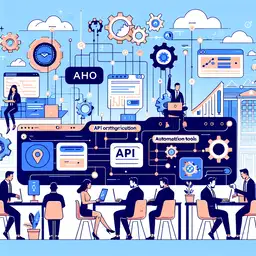
API Orchestration with Automation Tools: A Guide for South African Businesses in 2026
In South Africa's dynamic digital economy, API orchestration with automation tools is revolutionising how businesses manage complex integrations and workflows. As companies grapple with high data volumes from CRM systems, e-commerce platforms, and marketing automation, these tools enable…
API Orchestration with Automation Tools: A Guide for South African Businesses in 2026
API Orchestration with Automation Tools: A Guide for South African Businesses in 2026
Introduction to API Orchestration with Automation Tools
In South Africa's dynamic digital economy, API orchestration with automation tools is revolutionising how businesses manage complex integrations and workflows. As companies grapple with high data volumes from CRM systems, e-commerce platforms, and marketing automation, these tools enable seamless coordination of multiple APIs to automate processes efficiently.[1] This is especially vital in 2026, where AI workflow automation—a top-searched trend this month—powers everything from lead scoring to inventory syncs, helping firms overcome local challenges like load shedding and data costs.[1][2]
Whether you're a fintech startup in Johannesburg or a retail chain in Cape Town, mastering API orchestration with automation tools delivers agility, cost savings, and scalability without massive infrastructure spends.[1]
Why API Orchestration with Automation Tools Matters for South African Enterprises
South African businesses rely heavily on APIs for integrations across cloud services, SaaS apps, and legacy systems. Unorchestrated APIs cause latency, errors, and skyrocketing costs—issues worsened by network constraints and power instability.[1] Enter API orchestration with automation tools: these platforms sequence API calls, handle retries, and integrate AI for intelligent decision-making.
Key Benefits
- Reduce Latency: Asynchronous processing queues API requests, ensuring real-time apps like mobile banking run smoothly.[1][2]
- Cut Costs: Optimise cloud usage and minimise redundant calls, vital for data-expensive South African markets.[1]
- Enhance Scalability: Scale e-commerce or fintech operations regionally without downtime.[3]
- Boost AI Integration: Pair with AI workflow automation for automated invoicing, compliance checks, and ad bidding.[2][9]
For marketing teams, API orchestration with automation tools automates SEO planning and paid ad optimisation via API-driven AI workflows.[1]
Top Tools and Strategies for API Orchestration with Automation Tools
1. Leverage API Gateways and Orchestration Platforms
API gateways like Kong, AWS API Gateway, or Apollo GraphOS act as central hubs for routing, authentication, and monitoring.[2] They unify REST APIs into GraphQL supergraphs, simplifying API orchestration with automation tools across services.[2]
Inbound Link 1: Explore Mahala CRM's API documentation for optimised endpoints tailored to African markets, perfect for CRM integrations in South Africa.
2. Integrate Business Process Automation (BPA) Tools
South African favourites like FlowCentric Processware and Automate Enterprise excel in workflow automation, orchestrating APIs for onboarding, approvals, and service requests.[3] Pipefy adds rule-based pipelines for high-volume tasks.[3]
// Example: Simple API orchestration script using Node.js and async queues
const { Queue } = require('bull');
const crmQueue = new Queue('crm integration');

crmQueue.process(async (job) => {
  // Call Mahala CRM API
  const response = await fetch('https://mahalacrm.africa/api/leads', {
    method: 'POST',
    body: JSON.stringify(job.data)
  });
  return response.json();
});
3. Adopt AI-Powered Orchestration
Tools like Zapier, Prefect, and LangChain lead in AI workflow automation, orchestrating APIs with AI prompts for sentiment analysis or data routing.[6][9] Apideck unifies 190+ SaaS APIs with real-time syncs and OAuth handling.[4]
Inbound Link 2: Check Mahala CRM integrations page for seamless API orchestration with tools like these.
4. Monitor and Optimise
Use process mining tools like Celonis alongside API metrics (response time, error rates) for continuous improvement.[1] Edge caching with Cloudflare counters load shedding.[1]
Real-World Examples of API Orchestration with Automation Tools in South Africa
- E-commerce platforms sync inventory via orchestrated APIs to multiple suppliers, reducing stockouts.[1]
- Marketing agencies auto-adjust ad bids using AI-orchestrated calls to Google Ads and Facebook APIs.[2]
- HR teams automate employee onboarding with API flows for email, payroll, and compliance.[3]
For deeper insights, read this external guide: The 4 Best AI Orchestration Tools in 2026 by Zapier.[9]
Overcoming South African Challenges in API Orchestration
- Load Shedding: Hybrid cloud and edge computing for resilience.[1]
- High Data Costs: Compression and async processing to minimise transfers.[1]
- Compliance: Tools with built-in governance like Pliant or Qorus.[2][7]
Conclusion
API orchestration with automation tools is the competitive edge South African businesses need in 2026, blending AI workflow automation with robust integrations for efficiency and growth. Start by auditing your API calls, integrating a gateway, and exploring local tools like those from Mahala CRM. Embrace this trend to future-proof your operations amid South Africa's unique digital landscape.